
 By
By Internet Resilience Strategies for Reliable Global Digital Connectivity
The global internet is often described in ethereal terms—a borderless, omnipresent cloud that effortlessly routes the world’s commerce, communications, and critical infrastructure. In reality, the internet is intensely physical, remarkably fragile, and governed by aging protocols that were never designed to support the weight of modern global dependence. Thousands of miles of thin glass fibers resting on ocean floors, a handful of concentrated terrestrial landing stations, and a delicate system of trust-based routing protocols form the actual backbone of the global digital economy.
When a ship’s anchor drags across an undersea trench, a backhoe slices through a municipal conduit, or an erroneous configuration cascades through regional routers, the vulnerability of this system becomes instantly obvious. A localized break can sever financial markets, disrupt emergency services, and isolate entire regions within seconds. Achieving reliable global digital connectivity requires moving past the fantasy of passive network durability. True internet resilience requires deliberate, multi-layered architectural strategies spanning physical path diversity, autonomous protocol protection, edge decentralization, and continuous operational stress-testing.
De-Risking the Physical Backbone: Undersea and Terrestrial Diversity
Every packet traversing the globe eventually contends with geography. More than ninety-five percent of international data traffic travels not through satellites, but through undersea fiber-optic cables. These subsea systems run along predictable maritime corridors and pass through severe geographic chokepoints, such as the Red Sea, the Strait of Malacca, and the English Channel. A natural disaster, seismic shift, or targeted physical disruption in any of these narrow maritime corridors can instantly compromise transit capacity across continents.
Building physical resilience demands aggressive geographic diversification. Rather than simply buying redundant bandwidth from multiple transit providers that secretly lease capacity on the very same undersea cable, organizations and telecommunication consortiums must verify true physical path diversity. This involves laying routes along alternative oceanic paths, investing in trans-polar Arctic fiber routes, and engineering terrestrial bypasses that route around geopolitically volatile territories.
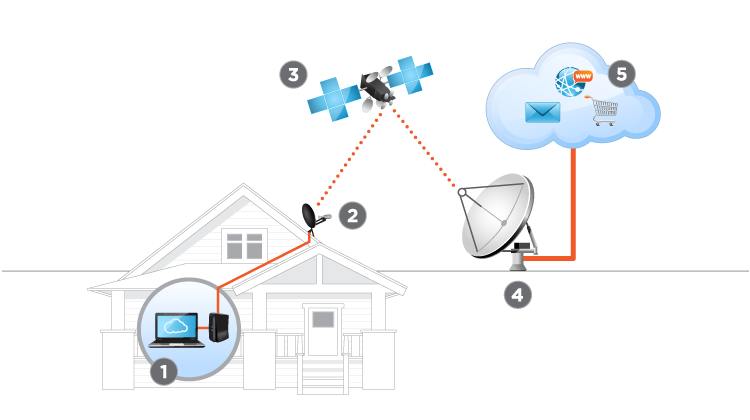
Terrestrial infrastructure requires the same level of paranoia. Resilient networks build ring topologies rather than linear spokes, ensuring that a physical fiber cut simply causes traffic to reverse direction along the surviving side of the loop without human intervention. Furthermore, the maturation of low-Earth orbit (LEO) satellite constellations has introduced a genuine, high-throughput secondary layer. While satellite networks cannot fully match the petabit capacity of deep-sea glass, they provide an invaluable out-of-band failover channel that keeps baseline communications and financial clearing houses operating when physical lines are severed.
Fortifying the Control Plane: BGP Security and Decentralized DNS
Physical wires mean nothing if the software responsible for directing traffic across them fails. The internet operates as a collection of tens of thousands of independently operated networks, known as Autonomous Systems (AS). These networks use the Border Gateway Protocol (BGP) to announce which blocks of IP addresses they own and exchange routing paths.
BGP was built on implicit trust, making it structurally susceptible to route leaks and malicious hijacks. A single misconfigured routing table at a small regional Internet Service Provider can mistakenly declare that it offers the shortest path to major cloud providers or global banks. When neighboring networks propagate that bad route, global traffic diverts into a computational black hole, generating widespread outages.
Securing the control plane requires widespread adoption of cryptographic route validation:
-
Resource Public Key Infrastructure (RPKI): Implementing RPKI allows network operators to cryptographically sign Route Origin Authorizations (ROAs), proving that an Autonomous System is genuinely authorized to broadcast specific IP prefixes. Routers along the path can automatically drop unverified or invalid route announcements, stopping BGP hijacks before traffic goes astray.
-
Route flap damping and strict prefix filtering: Transit providers must enforce strict route filtering on customer borders, automatically suppressing flapping routes that destabilize internal routing tables.
-
Anycast DNS distribution: The Domain Name System is the foundation of every digital interaction. Distributing DNS resolvers across dozens of global points of presence using IP Anycast ensures that queries are resolved locally. If an isolated DNS node collapses under a massive Distributed Denial of Service (DDoS) attack, surrounding nodes absorb the load seamlessly without interrupting name resolution for end users.
Localizing Traffic via Internet Exchange Points and Multi-CDN Architecture
A network that relies on long-distance transoceanic backhauls for routine daily traffic is inherently fragile. Resilient internet architecture prioritizes traffic localization, ensuring that communications between local endpoints remain within the immediate region whenever possible.
Internet Exchange Points (IXPs) play an indispensable role in this localization strategy. By establishing neutral, high-density physical meeting points where regional internet service providers, content platforms, and enterprise networks peer directly with one another, IXPs keep domestic traffic from needlessly bouncing through international transit hubs. If an international subsea cable goes dark, local banks, hospital records, and government services connected to a regional IXP continue functioning without missing a beat.
At the application layer, multi-Content Delivery Network (multi-CDN) strategies provide the ultimate safeguard against edge failures. Relying entirely on a single edge vendor creates a dangerous single point of failure; when that vendor’s global network encounters a software bug, every downstream application goes dark simultaneously. High-reliability digital services utilize intelligent traffic management layers that continuously monitor real-time latency, packet loss, and error rates across multiple independent CDN networks, shifting user requests to healthy secondary edges dynamically in milliseconds.
Active Chaos Engineering and Failover Discipline
Resilience is not a theoretical metric written into a network topology diagram; it is an operational muscle that must be trained under deliberate stress. Systems that are never tested in failure scenarios inevitably break during unexpected emergencies.
Forward-thinking infrastructure engineering teams incorporate chaos engineering into their regular network operations. They deliberately simulate worst-case scenarios during off-peak hours: severing redundant data center links, simulating BGP route withdrawals, cutting primary cloud transit feeds, and flooding backup routing engines with artificial load.
These controlled disruptions expose hidden dependencies that static audits miss, such as automated failover scripts that trigger cascading reconvergence storms or authentication servers that fail to authenticate backup connections because their own validation endpoints are unreachable. By turning simulated failures into routine operational drills, engineering teams ensure that automated recovery mechanisms act smoothly, quietly, and decisively when real-world crises occur.
The Continuing Imperative of Network Sovereignty and Redundancy
Global connectivity has become an essential utility alongside electrical power and clean water. The assumption that the public internet will always find a way to route around damage is an outdated myth from the network’s early research days. Modern digital systems are far too interconnected, complex, and commercially targeted to rely on chance.
Achieving true internet resilience requires continuous investment and architectural honesty. It demands laying diverse physical cables, enforcing strict cryptographic boundaries on routing protocols, anchoring traffic through local exchange hubs, and building multi-vendor redundancies into every software layer. The organizations and societies that design their networks to anticipate failure will remain connected, productive, and secure, while those that treat connectivity as an afterthought will find themselves stranded the moment an unseen cable gives way.
What is your reaction?
Excited
0
Happy
0
In Love
0
Not Sure
0
Silly
0